
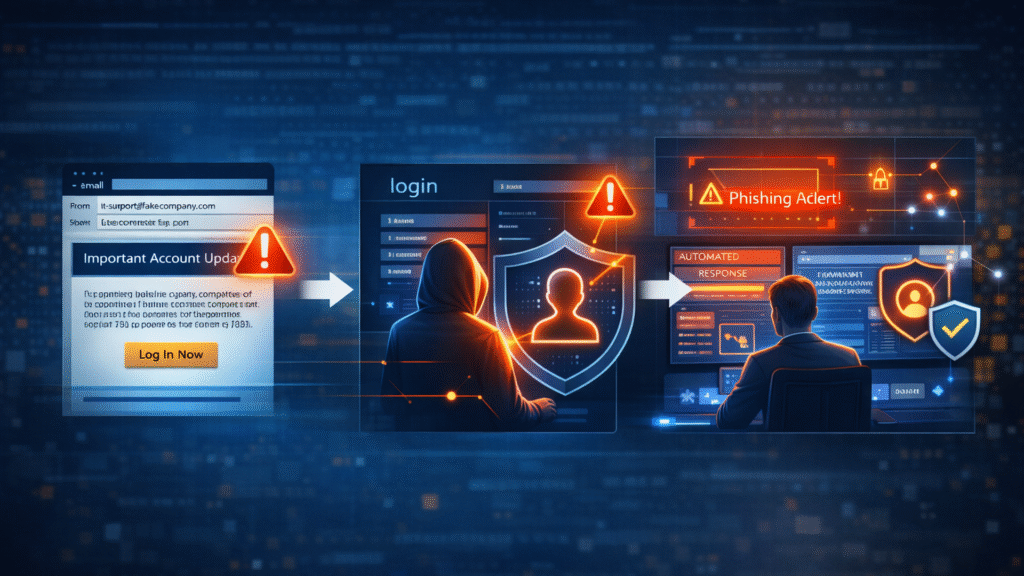
Why Phishing Remains the Most Effective Attack Vector
Phishing is not new, but it continues to be highly effective. The reason is straightforward: it exploits trust and urgency rather than technical vulnerabilities. Modern phishing campaigns are designed to mimic internal communication, abuse trusted brands, bypass basic filters, and target identity rather than devices.
Security awareness training remains important, but training alone has limits. People make mistakes, especially under pressure, and relying only on users to detect phishing creates a fragile defence model.
What reduces phishing impact in practice is a layered approach. Effective defence combines strong identity protection, conditional access, rapid detection of compromised credentials, automated response playbooks, and SOC visibility into identity-related events. The goal is not to assume phishing can always be prevented, but to assume attempts will occur and minimise impact through faster detection and response.
In environments supported by BluBiz, phishing incidents are managed most effectively when identity and SOC teams work closely together. Early detection and rapid response can dramatically reduce operational disruption.
If phishing incidents are still affecting day-to-day operations, it may be time to reassess detection and response capabilities, not only prevention controls.